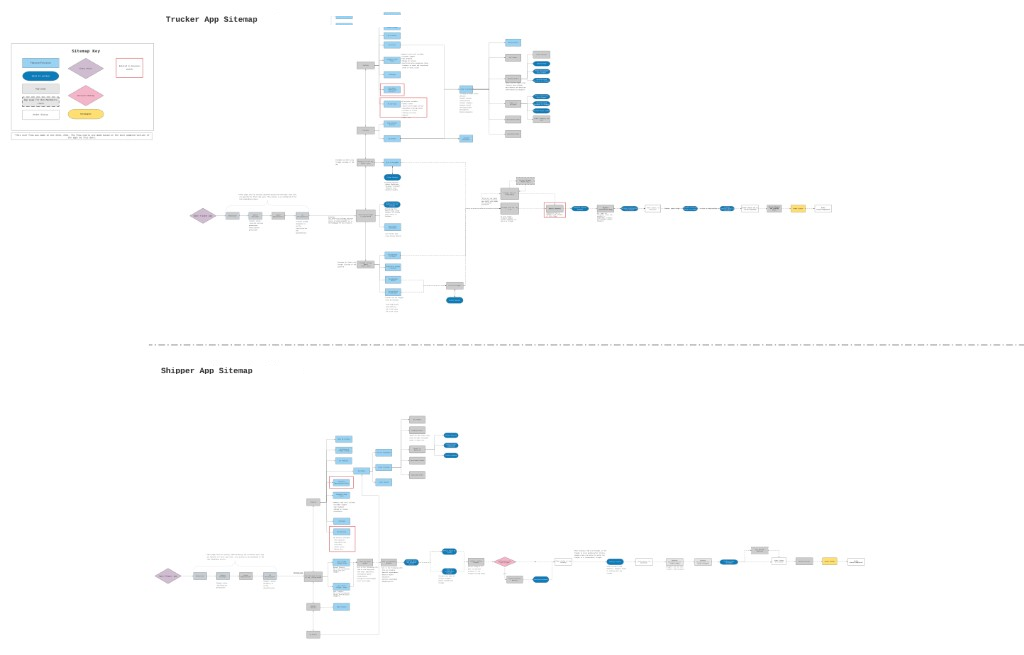
From design and market insight to product execution





Role
UI/UX Lead responsible for research framing, qualitative and comparative methods, synthesis into product direction, and design exploration for client stakeholders.
Methods
Depth interviews · Expert interviews · Comparative product research · Cultural analysis · Usability testing · Journey mapping · Persona development · Prototyping · Interface design · Workshop facilitation
At Digital Creative I led product research and design work for clients navigating mobility, automotive, retail, and emerging technology markets. The through-line was translating field insight (interviews, comparative product study, cultural and market analysis) into directions teams could design and decide against.
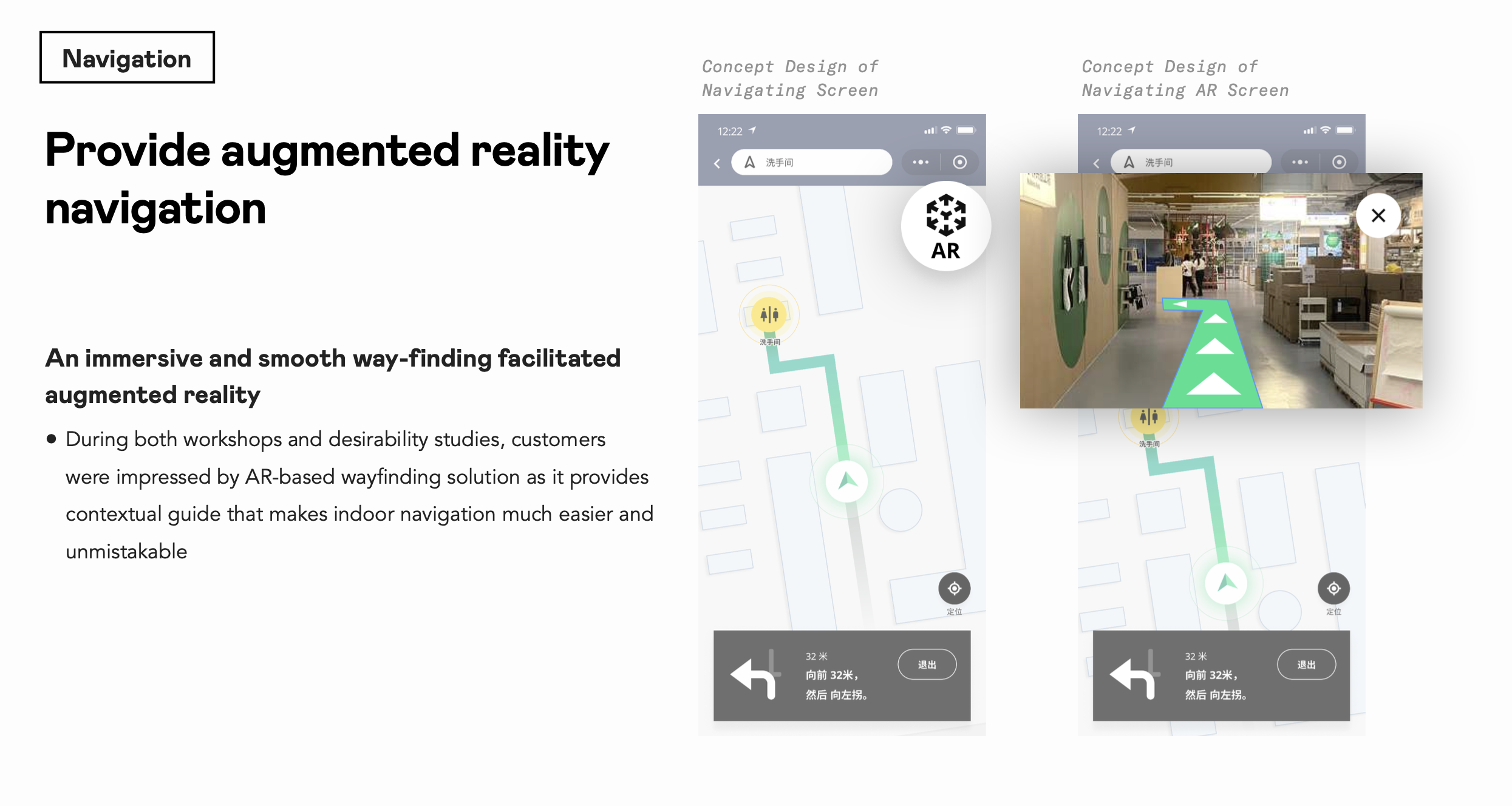
IKEA: in-store experience research & AR navigation
Approach
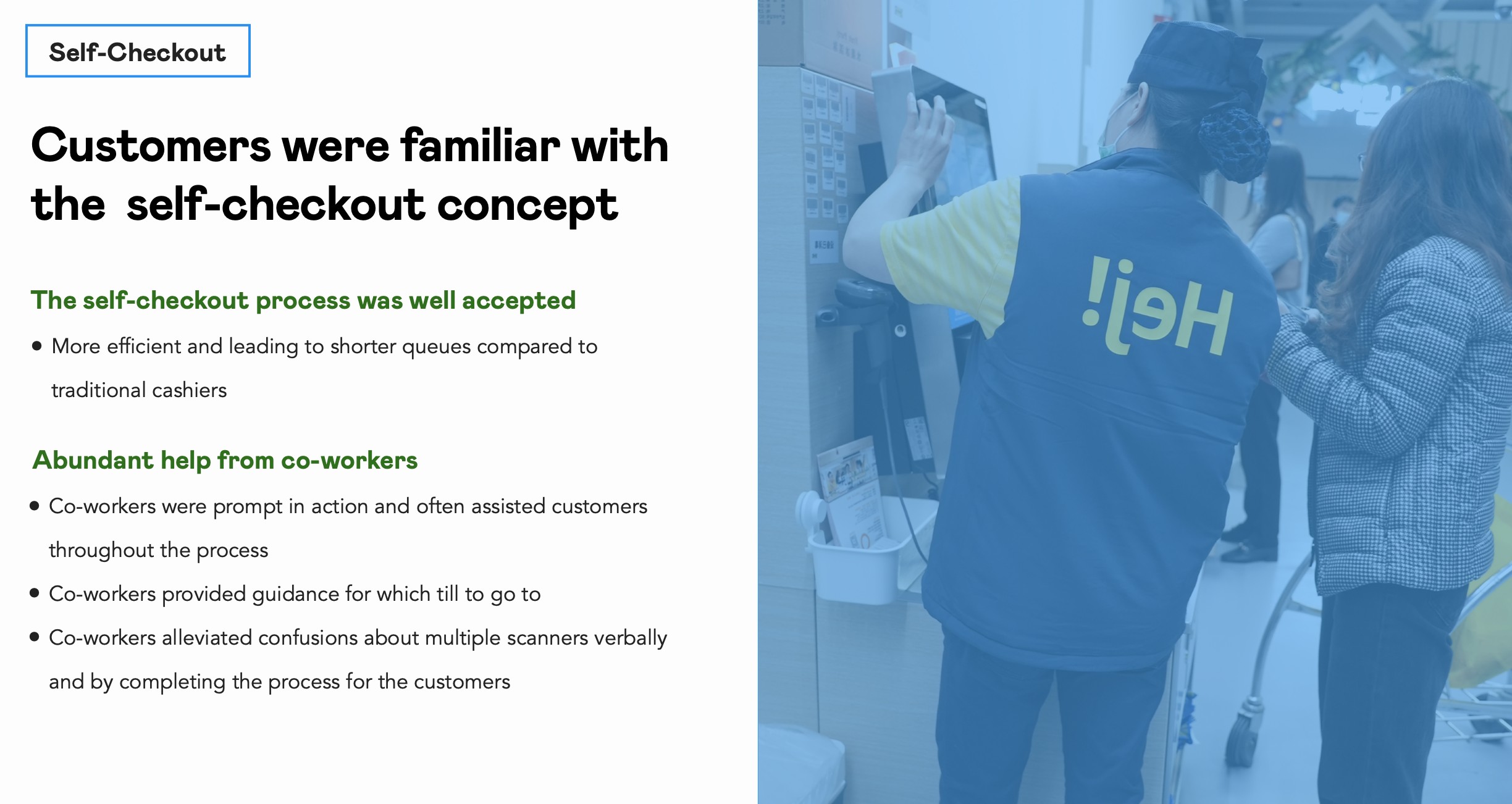
Research into how customers move through the store (including self-checkout familiarity, queue behavior, and co-worker support) informed concept work for in-store AR navigation.
Direction
Pair a map-based navigating screen with an AR mode for aisle-level guidance, backed by workshops and desirability studies.
Tata Group: EV insight research
Question
What can Chinese EV markets and innovation teach product and strategy questions in India: what to learn from, what not to copy, and where local conditions demand a different design response?
Outcome
Competitive and cultural signals abroad translated into opportunities relevant to the Indian market.
Volvo: navigation design research
Focus
How drivers understand, use, and respond to navigation systems in real-world interaction: attention, trust, moments of confusion, and how interface decisions shape the experience of getting somewhere.
Lear: age-inclusive design research
适老化设计
Context
In aging societies such as Japan and China, longevity is reshaping what mobility has to feel like. Automakers want interiors and interactions that honor older bodies and habits without treating age as a problem to solve. For Lear, whose clients include Toyota, that question sits close to the product: seats, entry, comfort, and the small rituals of a daily ride.
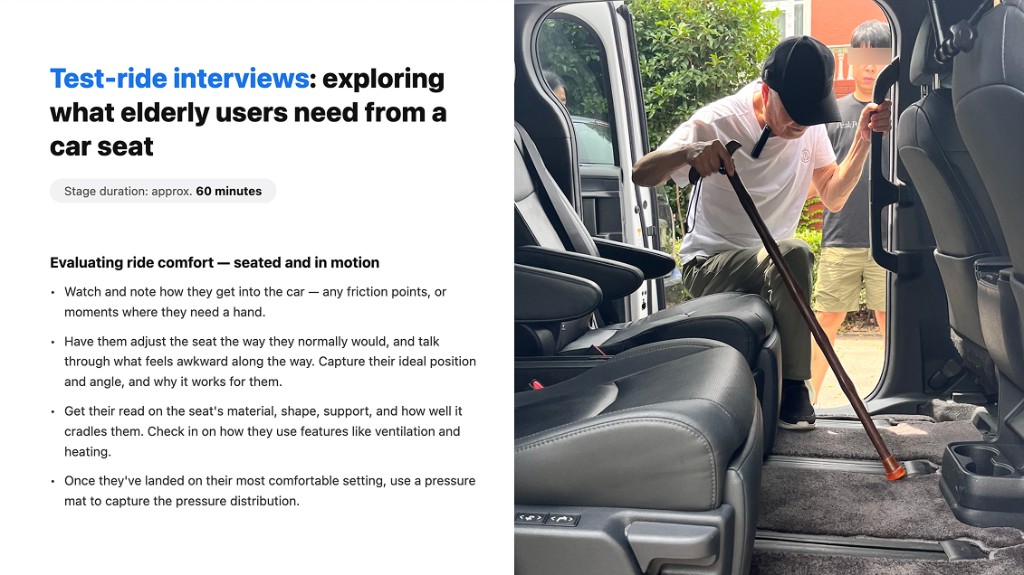
The brief was to understand what older passengers need from a car seat, and why current designs create friction, then surface opportunities for a more convenient, reassuring ride. In Shanghai we worked with older adults who travel regularly as passengers, often with long-standing discomfort in the back, knees, or hips, and with adult children who help decide what the family car should be.
Approach
The research mixed three qualitative layers:
- In-home interviews. How comfort is arranged at home (chairs, cushions, heat packs, braces), and how those habits travel into the car. Also how families weigh elders’ needs when buying.
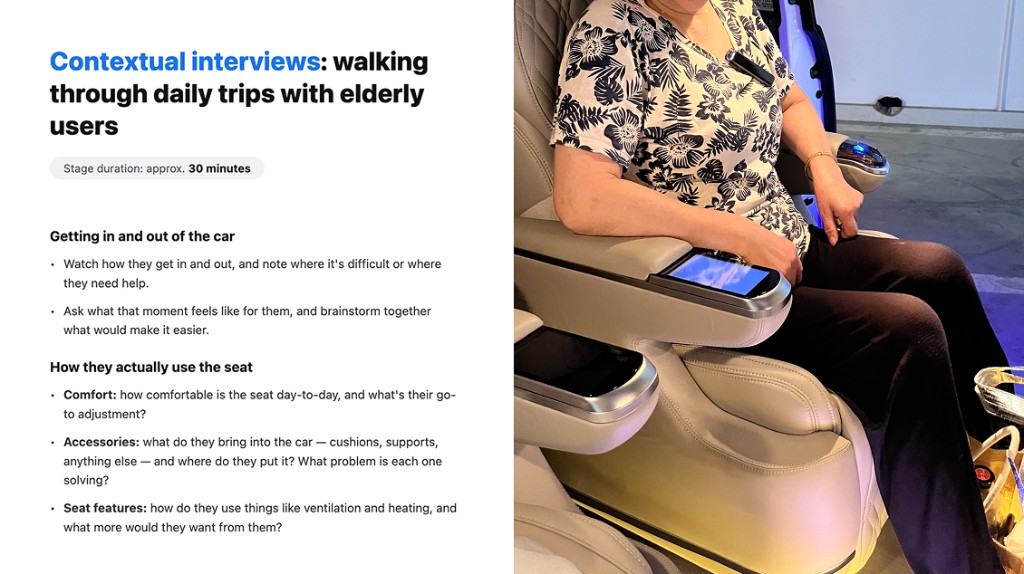
- Contextual interviews. Riding along in their everyday vehicles: watching entry and exit, seat adjustment, accessories, and which features (heat, ventilation) they actually use.
- Test-ride interviews. Side-by-side experience of research vehicles (including a Mercedes-Maybach and a Toyota Sienna), comparing adjustment, support, and the feel of getting in and out, with pressure-mat capture at each person’s most comfortable setting.
Insight
Needs sat on two planes at once: full-body physical support, and psychological stability in motion, including the ability to adjust without waiting for a family member.
Physically: neck, back, lumbar, and calf support; joint warmth; ways to change posture on a long ride, often preferring a seat that is firm underneath and soft at the surface. Entry and exit were as revealing as the seat itself: handholds, step height, and doorway clearance mattered as much as foam and bolsters. Controls needed to be independent and legible: power adjustment over manual effort, physical buttons over nested screen menus.
Many older passengers resisted “welfare” or disability-coded seats as a matter of dignity. Inclusive design had to feel ordinary, not like a special chair that announces frailty.
On the purchase side, adult children most often translated elders’ comfort into cabin space, easier ingress, seat height, and heating: upgrades chosen for the whole family, not for one labeled user.
Direction
Opportunity directions included modular comfort accessories, a gentler “wellness” seat mode with one-tap memory, and adjustment that keeps pace with the body in motion, so age shows up as lived habit, not as an edge case on the brief.
Fretebras: product research and design exploration
Question
What could Fretebras learn from a comparable “Uber for Trucks” model, and which lessons transfer into product and operating decisions?
Approach
- Clarifying what Fretebras needed to understand
- Comparative study of a related product and operating model
- Product design exploration grounded in that comparison
- Market analysis
- Expert interviews with executives on decisions, constraints, and transferable lessons
- Recommendations the company could take forward