
Playful software for self-directed learning
Buttercup
The quest
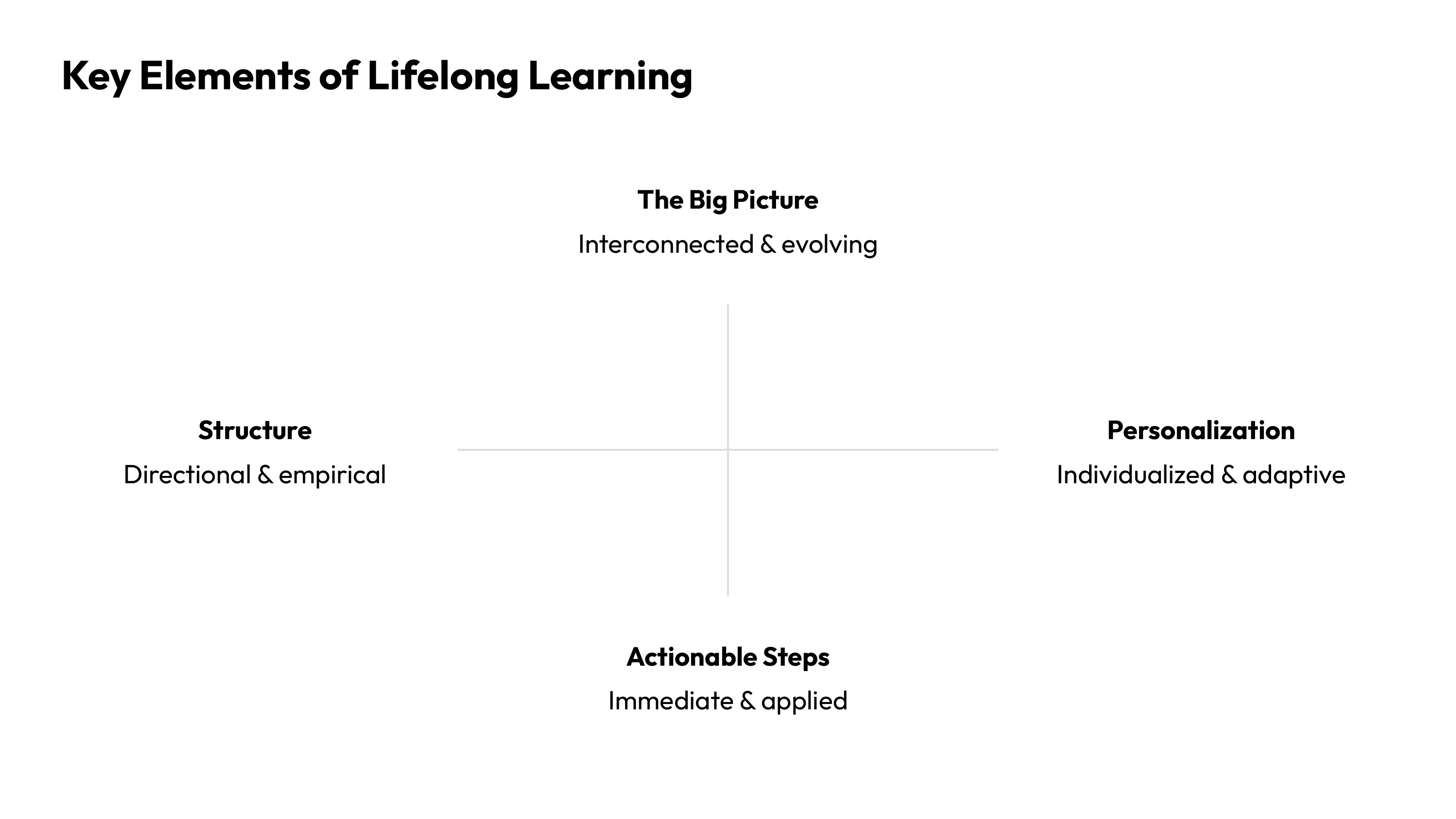
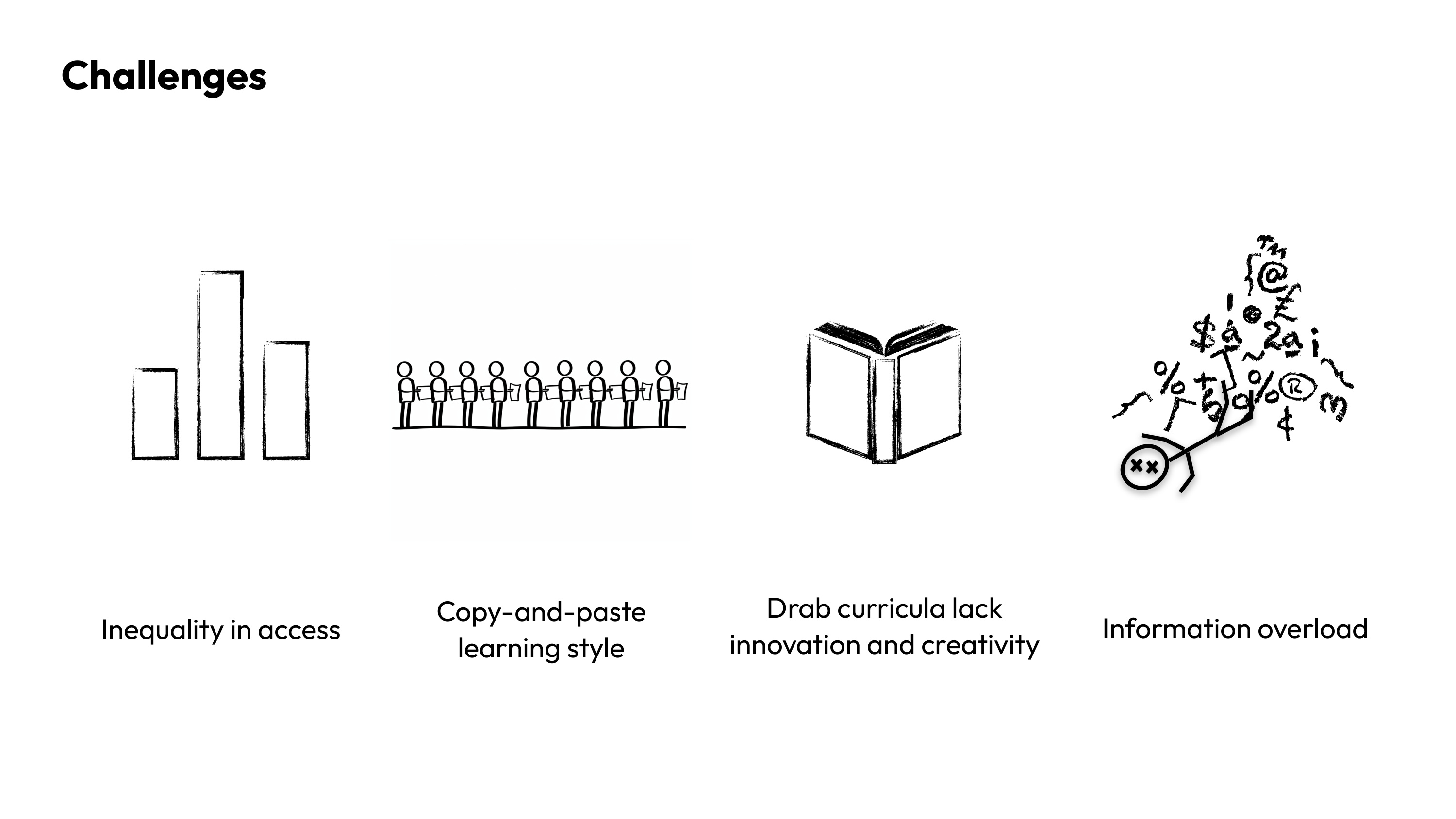
People keep learning long after school ends, but the tools around them assume they haven't. Courses assume a fixed curriculum. Note-taking apps organize information without teaching anything. Chat-based assistants answer a question well, then forget you the moment you close the tab. Nothing held the shape of what someone was curious about across weeks or months. No board. No way to watch a game in progress.
I wanted to build a game for the person with ten half-formed interests and no structure to hold them. Not a syllabus. Somewhere for the curiosity to move.
Scouting the players
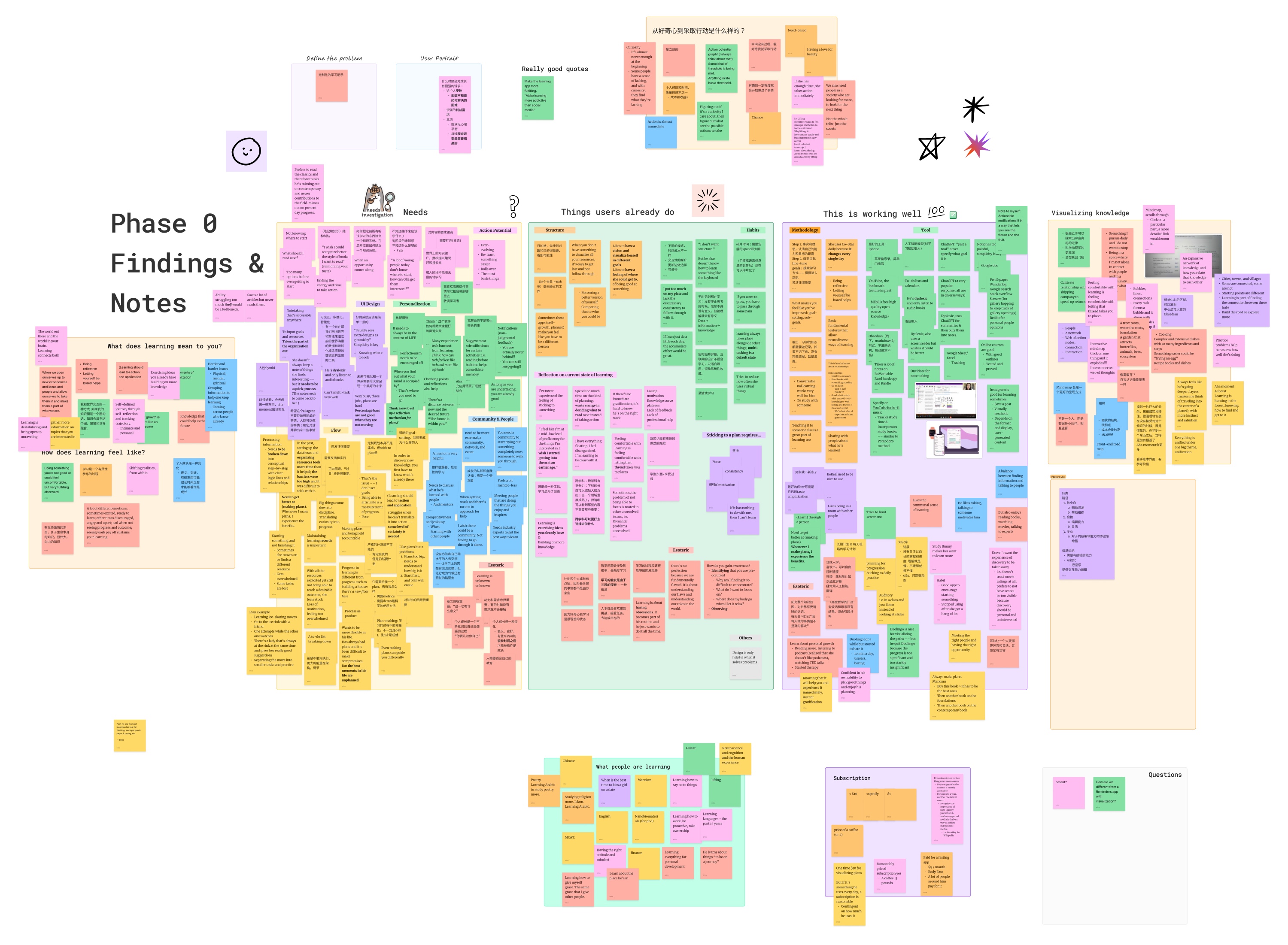
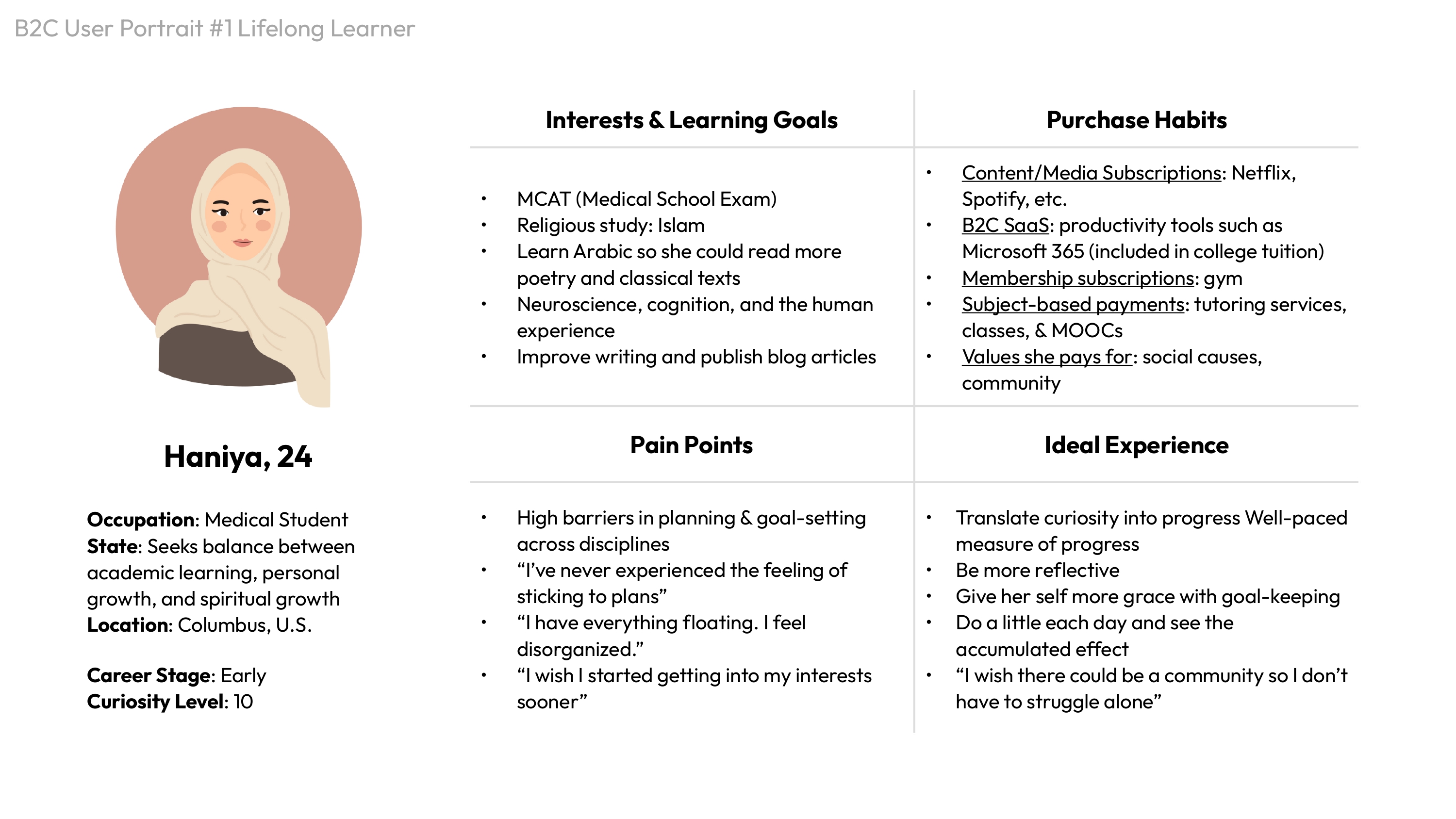
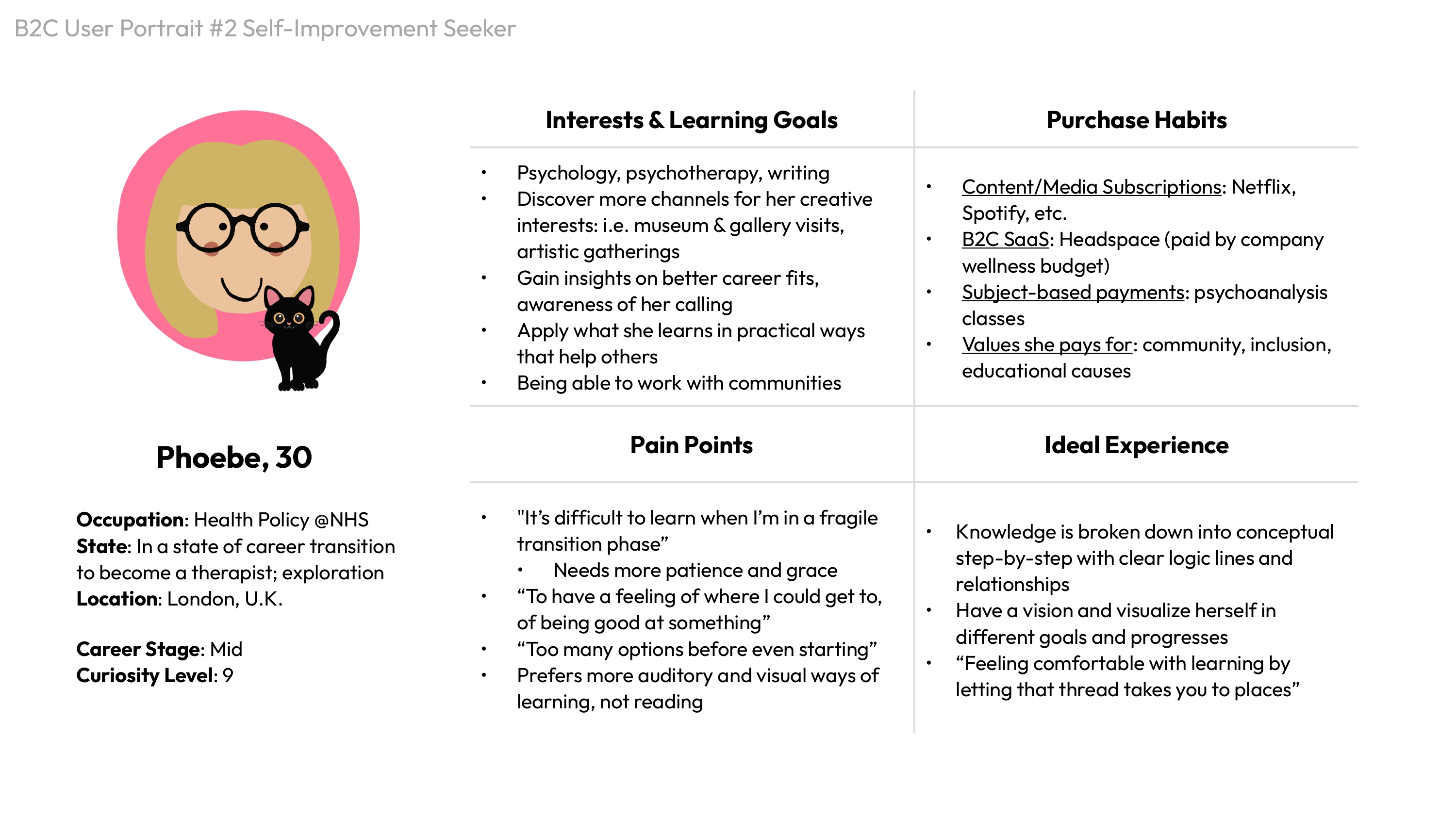
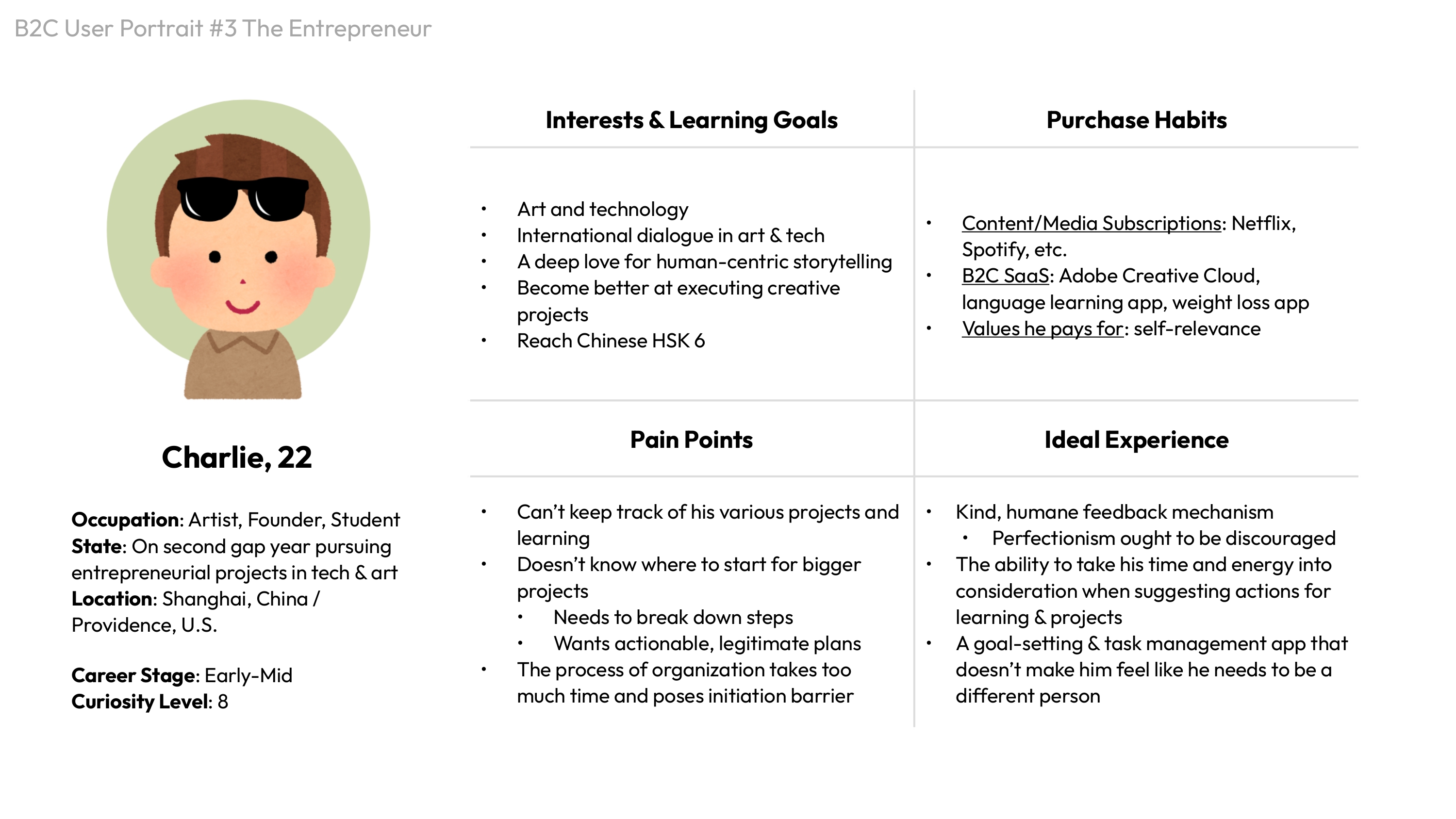
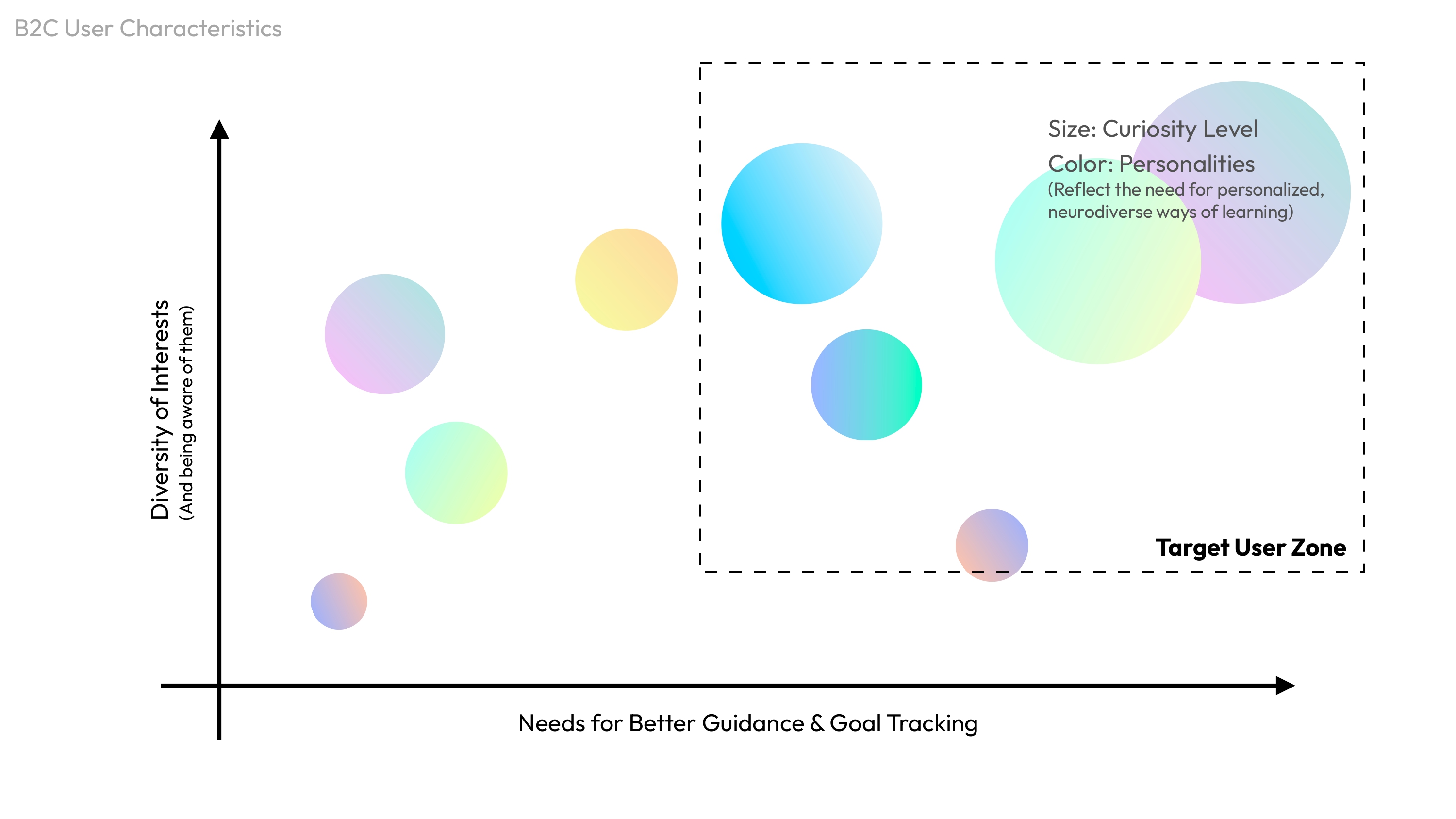
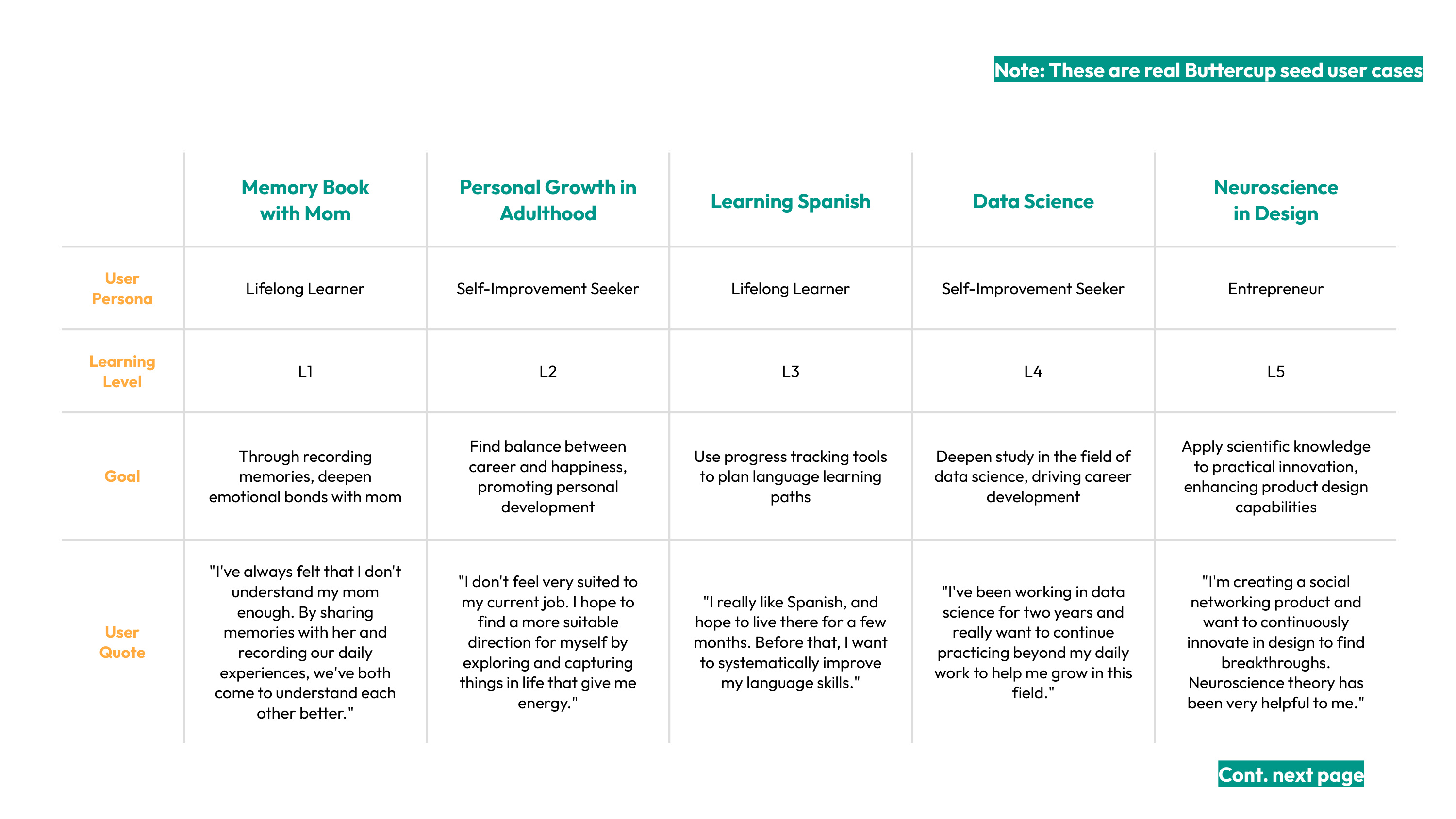
I spent around 150 hours in the field: interviews, persona work, testing early concepts with a small group across the US, UK, EU, and China. Three kinds of players kept showing up.
The Collector. Curious about everything, organized about nothing. A medical student studying Arabic on the side to read poetry in the original told me, “I wish I started getting into my interests sooner.” It wasn't a motivation problem. Scattered interests needed to add up to something before they felt like they counted.
The Wanderer. Mid-transition, usually a career change, frozen by how many directions were available. She wanted “a feeling of where I could get to, of being good at something” before she'd even start moving.
The Builder. More project ideas than time, stalling out on the first one. Ambition wasn't the shortage. Permission to make the first step small enough to actually take was.
Lo-fi prototypes
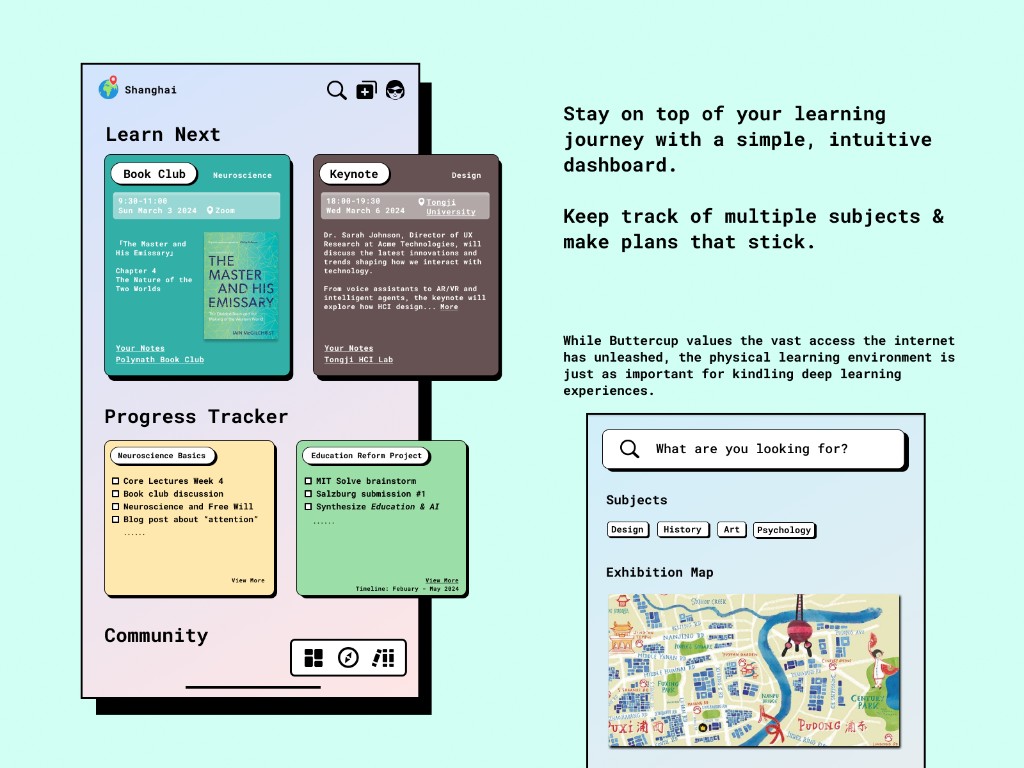
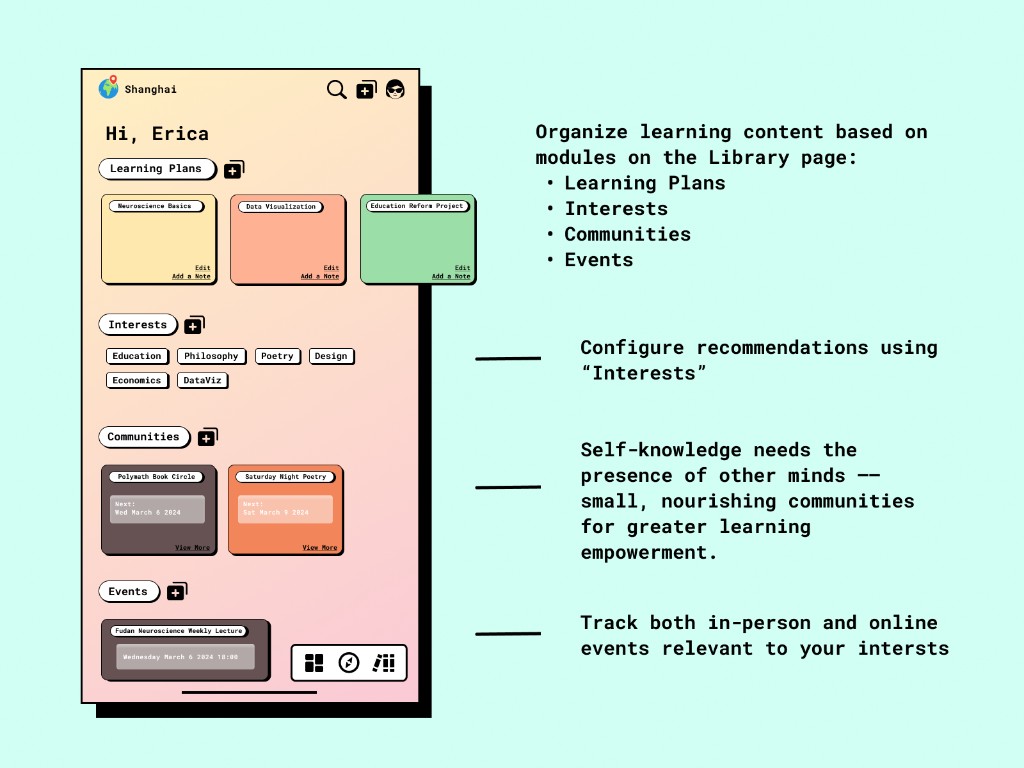
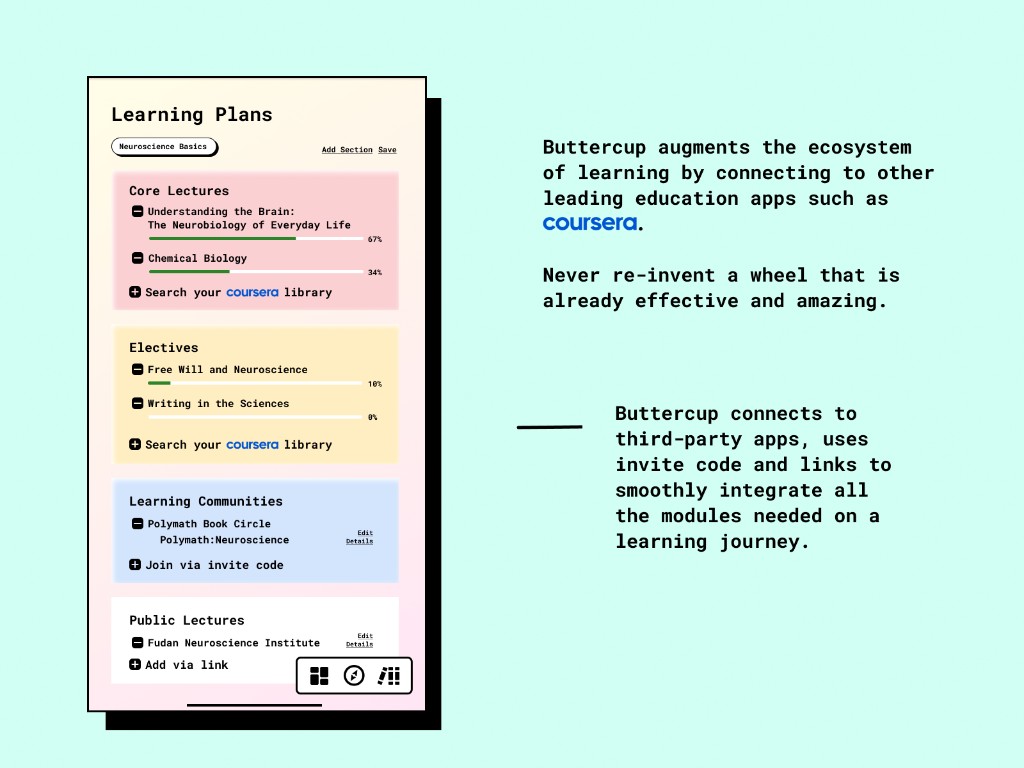
Before Cosmos, The Meadow, and Rabbit Hole had names, I sketched an earlier shape: a dashboard for what to learn next, a library of plans and communities, and learning plans that could pull in other apps. These lo-fi prototypes were a way to think through whether a learning journey could hold together on one screen: rough enough to move quickly, specific enough to test.
How to play
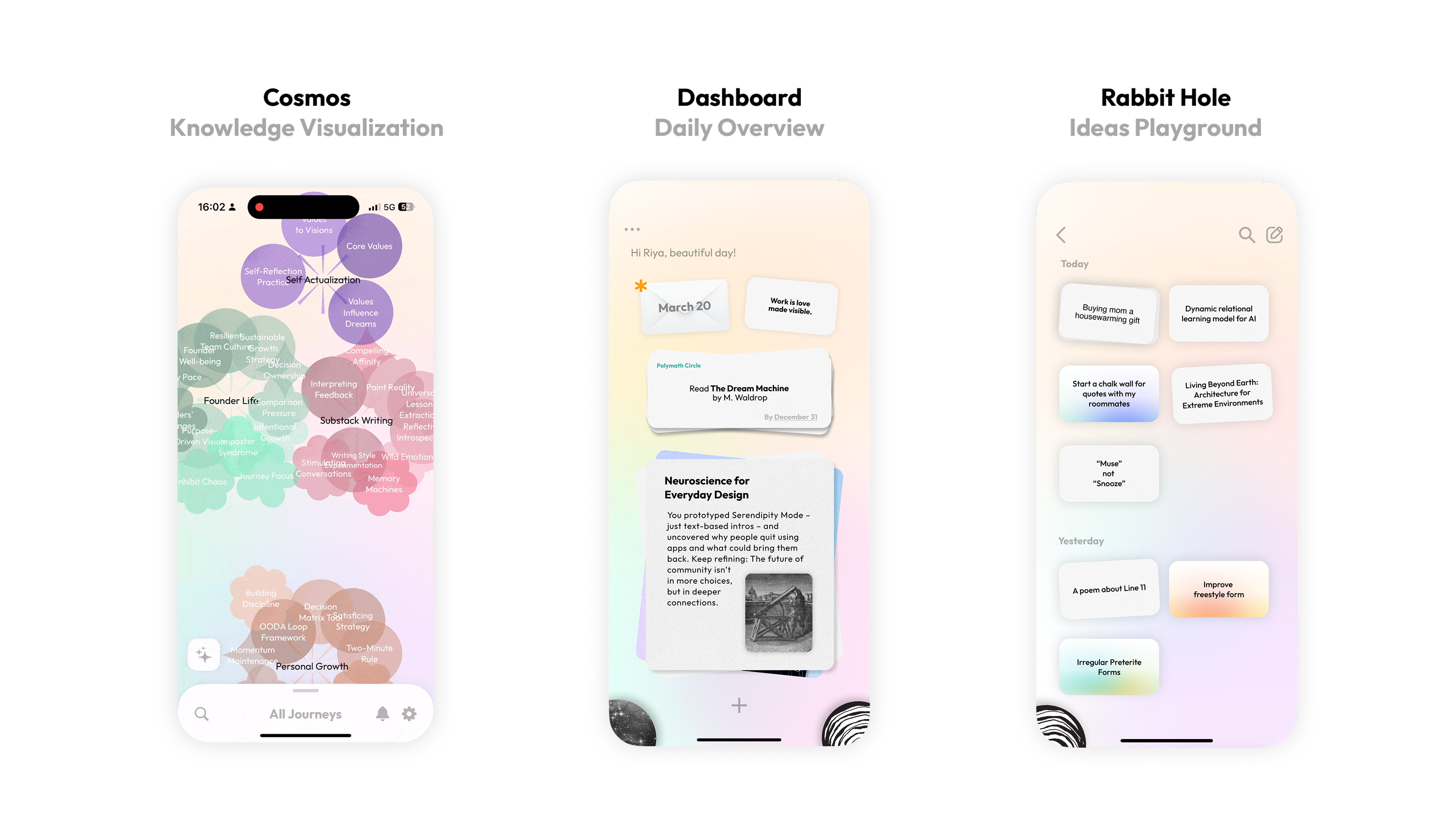
Those sketches became three named screens, plus a level system underneath them.
Cosmos. The map. It grew as someone learned, so progress looked like a constellation forming instead of a bar filling up.
The Meadow. Home base. Built around the single thread most worth returning to that day, rather than a wall of unread everything.
Rabbit Hole. The sandbox. A place for half-formed questions and tangents worth remembering but not yet worth acting on.
Underneath all three sat a five-rank level system: Explorer, Enthusiast, Devotee, Virtuoso, Trailblazer, tracking how casual curiosity turns into depth. Instead of a scorekeeper, a “slow thinking” AI layer behaved more like a narrator. It responded to what someone was actually learning instead of quizzing them about it.
Playtesting
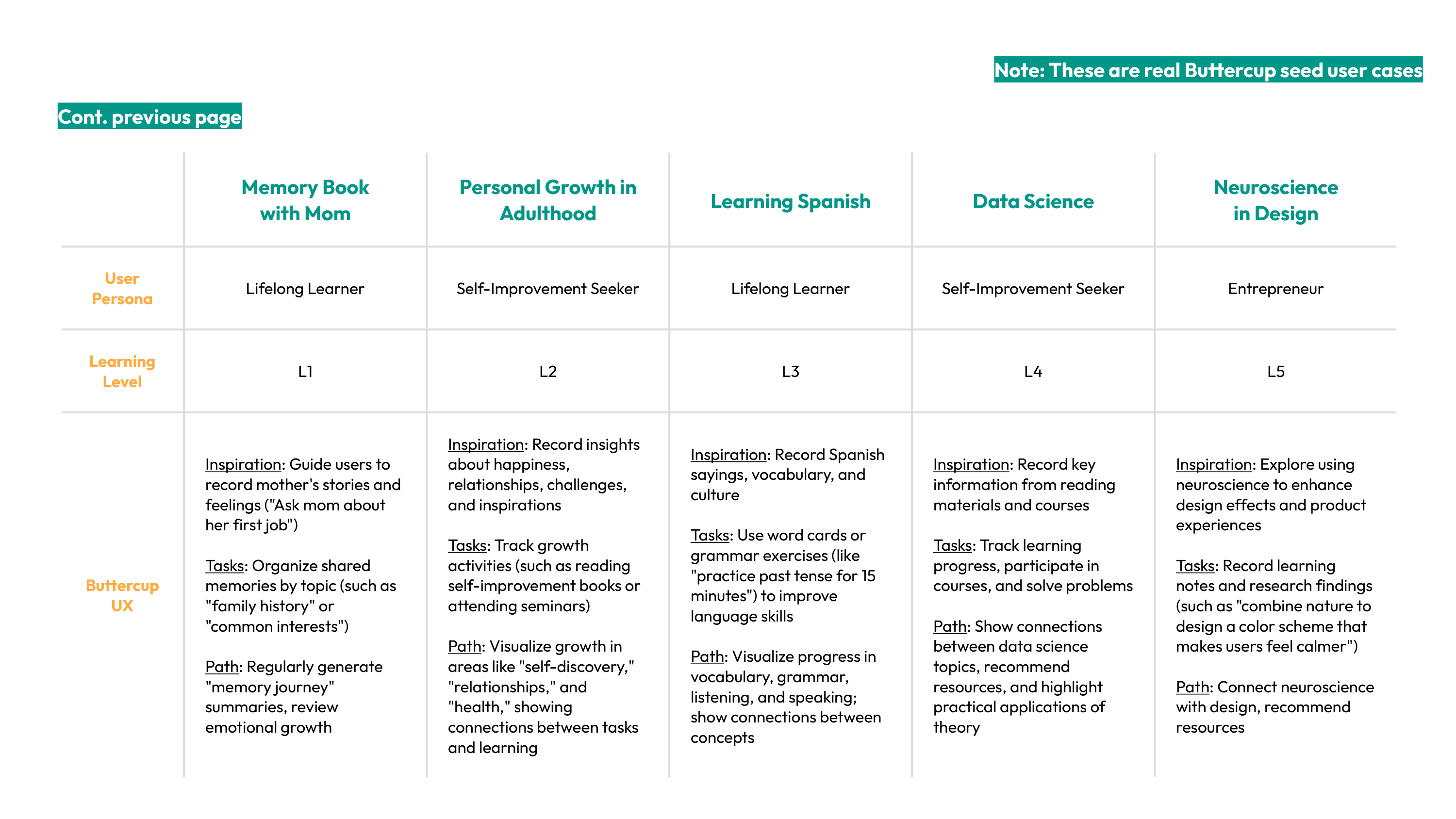
The game traveled further than I expected for something built solo and tested with a small beta group. One player used it to plan a shift into data science. Another used it to build fluency in Spanish before a move. We ran a couple of in-person workshops off the back of it, “Design Personal Growth” and “Mapping Your World,” both built with collaborators and hosted at a design academy in China, where people played the game on paper before ever opening the app.
The run that stayed with me longest broke the rules of the game entirely. A player was recording conversations with her mother, not to study anything, just so the two of them could understand each other better through what they remembered together. It kept showing up in interviews and feedback even though nothing in the game was built for it.
That's the thread that eventually became the seed of the project I'm building now: a place to keep the record of a relationship, not a curriculum.
Patch notes
The level system was over-engineered. Five ranks is a lot of scaffolding for a habit that mostly needed less friction, not more structure to climb.
The economy was fictional. I spent real time modeling B2B revenue and 5% conversion rates before I had enough real players to know if either number meant anything. That time would have been better spent talking to player sixteen.
Methods
Depth interviews · Persona development · Prototyping · Interface design · Usability testing · Co-design · Workshop facilitation · AI interaction design